


We are helping to raise awareness and encourage women to know the signs of ovarian cancer. We want more women to be diagnosed at an earlier stage, when treatment is more likely to be successful.
On this page you can find more information about the symptoms of ovarian cancer, Em’s personal story, and links to further information.
Contact your GP if you are worried.

Ovarian Cancer Symptoms
The main symptoms of ovarian cancer are:
- persistent bloating or a swollen tummy
- reduced appetite or feeling full quickly after eating
- pain or tenderness in your tummy or pelvis (the area between the hips)
- urinary symptoms (needing to wee more urgently or more often)
These symptoms will be:
- frequent – they will usually happen more than 12 times per month
- persistent – they don’t go away
- new – they’re not normal for you
If you are experiencing any of these symptoms please speak to your GP.
9 times out of 10 it will not be cancer, but it is better to know. Catching it early will make it easier to treat.
Facts and Figures
– Across Wessex, about 350 women are diagnosed with ovarian cancer each year
– There are around 7,500 new ovarian cancer cases in the UK every year. That’s 21 every day
– Ovarian cancer rates in the UK are highest in females aged 75 to 79
– Ovarian cancer is the 6th most common cancer in females in the UK
– In 2020 about 63% of ovarian cancer cases in Wessex were diagnosed at a late stage
Em’s Ovarian Cancer Story
Em was diagnosed with ovarian cancer in 2023. She first noticed that when lying on her stomach, it felt uncomfortable and when lying down one morning she felt a large lump in her tummy and knew this was not normal for her. Em called her GP and they sent her for tests, including a CT scan. The tests revealed ‘a large suspicious looking, ovarian mass’.
When Em met with the Gynaecology Consultant, they discussed her treatment options. Em agreed to have a full hysterectomy and the surgery went ahead in May 2023. Apart from feeling increasingly bloated, Em felt no other symptoms and continued to work as normal until her surgery. Following tests post operation, Em was diagnosed with ovarian cancer.
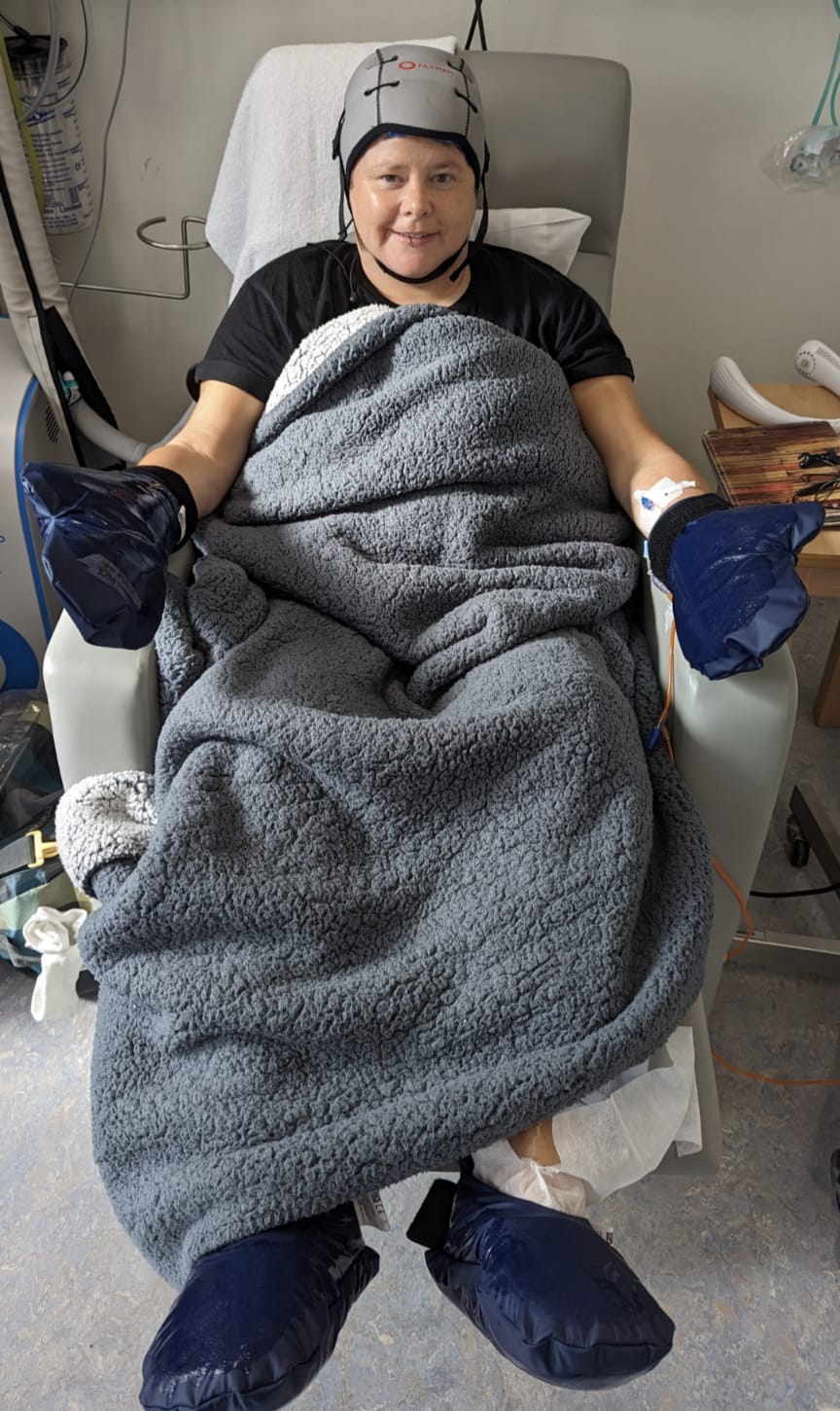
After 12 weeks recovery, Em began chemotherapy to ensure all the cancer was gone. She had 4 cycles of chemo and again, she managed to keep working during this time. Em chose to wear a cold cap to help prevent hair loss during her treatment, and also took part in a trial which meant she wore ‘cold boots’ and ‘cold gloves’ during her chemo, to reduce the side effects of neuropathy (damage caused to nerves in the tips of fingers and toes).
After her fourth chemotherapy session, Em had a scan to confirm she was now cancer-free. The treatment had worked. For the next 5 years Em will go for regular checks to make sure she remains cancer free. These start off once every three months, then move to six monthly and then yearly.
Em wants to encourage other women to seek advice if they are worried. She says “you know what is normal for you and if you have any concerns at all, then go and get it checked.”
Useful Links
You can find a lot more information about ovarian cancer on these external websites. You can also get support over the phone or online from dedicated ovarian cancer charities.
If you have any questions about the information on this page please Contact Us